aasspass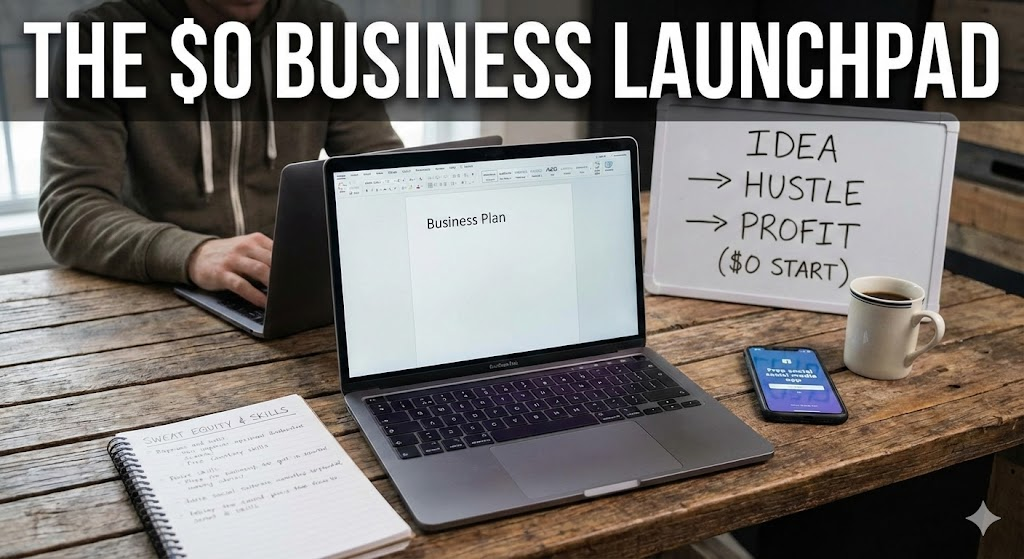
The biggest myth in entrepreneurship is that “it takes money to make money.”
While money acts as gasoline to make a fire burn faster, it is not the spark. The spark is execution. If you have zero financial capital, you must replace it with three other forms of capital: Time, Energy, and Skill.
Here is the step-by-step guide to launching a business when your bank account is at zero.
Phase 1: Choose the Right Business Model
You cannot manufacture a physical product or open a retail store with $0. You must choose a model that requires Low Overhead and High Margins.
1. Service-Based Businesses (The Fastest Route)
Sell your time and expertise. It costs nothing to offer a service.
- Examples: Copywriting, graphic design, virtual assistance, social media management, tutoring, or home cleaning.
- The Strategy: You are the product. You don’t need inventory; you just need to convince one person to hire you.
2. Digital Products
Create something once and sell it infinitely.
- Examples: E-books, templates (Notion, Excel, Canva), or presets.
- The Strategy: Use free tools to create the asset. A PDF costs nothing to generate.
3. Brokerage / Middleman
Connect a buyer and a seller and take a cut.
- Examples: Drop-servicing (finding a client who needs a logo for $100, hiring a freelancer for $50, keeping the difference).
Phase 2: The “Zero-Cost” Tech Stack
You do not need a fancy website, a custom domain, or expensive software to start. Use the free tiers of these powerful tools:
| Function | Expensive Tool | The $0 Alternative |
| Website | WordPress/Squarespace | Notion or Carrd.co (Free one-page sites) |
| Design | Adobe Photoshop | Canva (Free tier is powerful) |
| Communication | Slack/Zoom Premium | WhatsApp Business & Google Meet |
| Writing/Docs | Microsoft Office | Google Workspace (Docs, Sheets) |
| Payments | Point of Sale Systems | Stripe or PayPal (They only charge when you get paid) |
| CRM | Salesforce | HubSpot (Free tier) or a simple Google Sheet |
Pro Tip: Do not buy a logo or a domain name until you have made your first sale. Use your personal name or a generic placeholder until the revenue validates the business.
Phase 3: Validation (Getting the First “Yes”)
Most people fail because they build a product nobody wants. With $0, you cannot afford that risk. You must sell before you build.
The “Cold Outreach” Method:
Since you cannot afford ads, you must use “Sweat Equity” marketing.
- Identify 50 prospects: Who exactly needs your service? (e.g., Local real estate agents who need better Instagram posts).
- The Value Offer: Don’t ask for money immediately. Offer value.
- Bad: “Can I manage your social media for $500?”
- Good: “I noticed your last 3 posts didn’t have hashtags. I wrote 5 captions for you for free. If you like them, let’s talk about how I can do this every week.”
- Direct Messaging: Use LinkedIn, Instagram DMs, or cold email to send these personalized offers.
Phase 4: The Reinvestment Loop
This is the most critical step. When you make your first $100, do not spend it on dinner.
You are currently bootstrapping. You must pour every dollar back into the business to buy back your time.
- First $15: Buy your custom domain name (brand legitimacy).
- Next $300: File for an LLC or business registration (legal protection).
- Next $500: Upgrade your software or hire a freelancer to do the lower-level tasks so you can focus on sales.
Summary Checklist for Day 1
- [ ] Define your skill: What can you do better than the average person?
- [ ] Define your customer: Who has money but no time to do that skill?
- [ ] Create the offer: Package your skill as a solution to their problem.
- [ ] Send 10 messages: Reach out to potential clients today.
Conclusion
Starting with zero funds isn’t a disadvantage; it’s a filter. It forces you to be creative, resourceful, and focused on sales rather than vanity metrics like office space or logos. The only thing standing between you and a business is the courage to ask for the sale.